Wednesday, February 8, 2017

"Coyotes" Invocation


Language Dog

                                            Hey, hey Coyote come to my poem!
                                            I am cooking up duck, snake, deer,
                                            and you're called here Coyote!
                                           "Hey, Man have you seen Coyote?"
                                           "Oh yeah. Over up on the hill and down by the creek,
                                            roaming the brush and weaving in dreams. . . 
                                            Coyote running through dreamtime 
                                            miles and miles all night long.
                                            Coyote worked a new song from all the torn pieces--
                                            He raised up a new song."
                                            "I heard," said Spider. "I heard too," Hawk said.  
                                            "Heard him," said Frog and Eagle.
                                            Coyote's song sounded like some of the old ones,
                                            new waters over old rocks.
                                            We seen him with the moon
                                            and some girls, seen all their shadows, 
                                            all his women dancing on the rocks like a painting.
                                            Red rock held them all flowing together.
                                            So come to the poem Coyote,
                                            maybe on your way back here?
                                            Ha ha yip yip wooh
                                            meaning something like I might
                                            unless my nose turns me another way.
                                            You want me, watch out for me! 
                                            I am always coming around.
                                            Ahh Haiyeee!

Thursday, February 2, 2017

San Jose State University

Tower Hall
    The Tower Hall we see standing today as the center piece for San Jose State University dates from 1910. I often did some leisurely study on the lawn surrounding the Tower and imagined my essays taking form as the sun's rays soothed me into a nap. The lawn was always a popular frisbee spot, a place to whisper secrets to your busom buddy, sunbathe and people watch, or soak in a novel for your Faulkner seminar. It was an environ of possibility where the future was near but not unsettlingly so. I was an almost-teacher at the oldest teacher's college in California
         
Tower Hall grounds (SJSU Archives)
--a lot easier than being a practicing teacher inside four walls in front of flesh and blood middle or high school students who, as a general rule, would rather be free or at least on an unchaperoned trip spending gobs of someone else's money at Great America's Amusement Park. I picnicked with my ideals. I wore shorts. The sun ran his indulgent warm fingers through my hair. It was an idyll. Those drifty and sweet midday afternoons were my 'Apple' rather than that smudgy apple sitting on a desk in a room permitting precious little natural light-- a certain apple with its gloom and fate-- a lunchbox apple holding down 80 quizzes yet-to-be-graded, recorded, and returned to their affronted owners. No. There was not "an app for that" yet.
    But, emerging from the daydream and resuming our walk. . . I headed over to the Department of Biological Sciences Botany Garden just north of Duncan Hall. My father taught as a professor of Meteorology for twenty years inside Carl D. Duncan Hall and his office was there too. I considered this my father's building when I was a little girl:
Dad's Carl D. Duncan Hall
You had to get in an elevator and stand in front of a nice lady who wore glasses around her neck and tell her about your school day before you could talk to your dad. We often walked home together after the bell rang at Horse-Man (Horace Man Elementary) and I found him in his office. I knew strange things occurred in his white and black blockish building because one day my dad shattered a banana over a lab counter in front of my whole fourth grade class, making our teacher blink hard and a few boys back up on their heels.
    In the basement of the building there were slow and bored looking fish hovering in tanks in the walls. I peered at them before getting back in the elevator whenever I pushed the elevator's down arrow on accident.
    On a good day Professor MacKay might have a few things to finish up and I'd go to the candy machine with the giant buttons to buy some Lifesavers or a Hersheys. As you can see, the place is crisscrossed with memories for me.
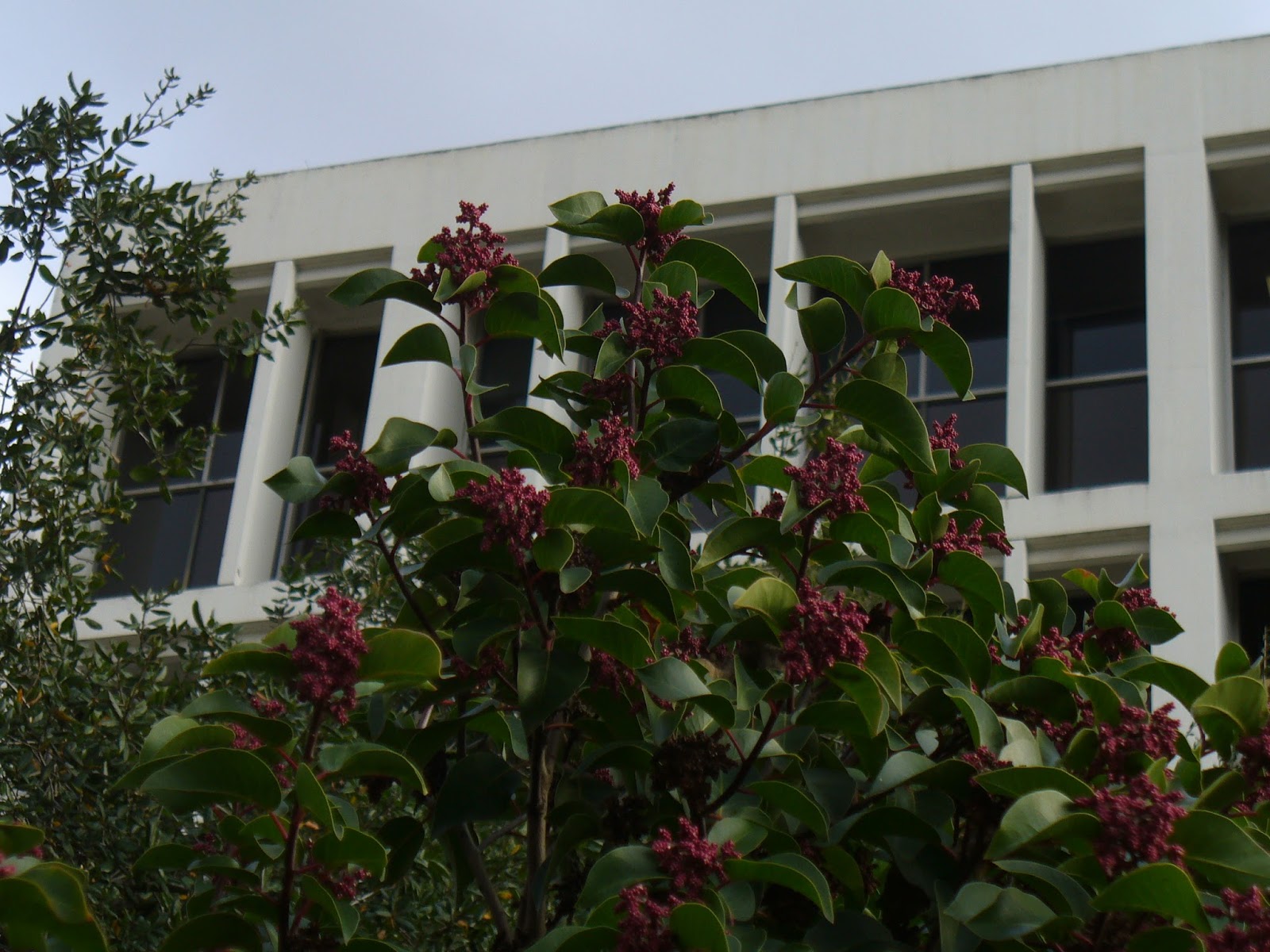
    I took a few pictures outside Duncan Hall of the California natives in the Botany Garden. Students, interns, and professors planted specimens from 42 different plant families in this small area beginning the project in the 1980s. Below is deergrass, a perennial bunchgrass which was outpaced by invasive grasses during the 1700s. Increasingly I encounter this graceful California native among landscape selections around homes, industrial buildings, and in parks such as the Guadalupe Rotary Playgarden. They sway gently with the breezes. Their tall flower stalks light up sometimes a warm and humble golden-brown.

Muhlenbergia rigens


Thursday, January 26, 2017

To Ulistac Once More


California Wild Rose

    Yesterday I walked and weeded at Ulistac. Walking while weeding is different from going out for a walk and from hiking. It is like 2 steps- weed, carry weeds, 5 steps- weed some more, forget where you were, go back to beginning. It is in fact a lot like turning in circles, just with more stops and muddier. It's more productive than spinning, in a sense, at least in the short view. Of course, the weeds return and round you go. Bending down and touching the ground is also more like taking a walk as your two-year old self because you notice more at ground level. There are earthworms and stones. There are places where a Huckleberry vine stitches itself across the ground. There are the seed leaves of a buckeye brought forth by many closely spaced rainstorms followed by a strand of crisp, sunny January days. The buckeye seeds the volunteers tucked in several short weeks, or perhaps it was months, ago sprout up so close to ground level that you would not have seen them were you standing up or else in passing. It was their strange so-green-it-is-purple hue which caught your eye. You have to narrow your world and become wee faeirie size. Little ladybugs become the size of small dogs. The squeaky hummingbird over your head is getting around a lot more today. Weeding is like reading the earth with your hands.
    I also cut sprigs from willow, Toyonberry, Flannel bush and Mulefat and left them pondering in a bucket of magic solution which Dennis, the Site Manager at Ulistac, had prepared and left for them. 'Site Manager' does not really represent fairly what Dennis is to Ulistac Natural Area and the collective vision at the soul of the place. He's a diplomat and visionary, a scholar and a laborer. Some like to call him the 'John Muir of Ulistac.' You have to go there and shake his hand to really get it. Come here. Dig with us. Get to know new plants (their fragrances, their desires, even their secret powers);  move mulch, restore California's native habitat and meet a dedicated, impassioned community builder who has helped plan and tend this beautiful sanctuary. Our work sessions are the 1st Saturday and the 3rd Sunday of every month, ongoing, from 10:00 a.m. until 1:00 p.m (until we switch to summertime hours; please refer to Ulistac.org for more details.)
    There are many special persons to meet in the Ulistac network. Some of my dearest friends out there are among the wildlife and after these several years, even the plants. The sages have flesh just like we do. The ceanothus has its time of climax. They trees too have their beginnings and their endings. Others inhabitants are the Old Ones who walk the place; guardians. They knew the bears, hunted elk and deer, fished in the river, and made their seasonal villages there for thousands of years. It is a powerful spot. When I see the children play as I stroll or during my work, I like to think of the Ohlone children 300 or 700 years ago also running, rolling and chasing around. At the Annual Wildflower Celebration children get a chance to play the staves or clap clapper sticks made from the straight limbs of the elderberry, One long-time volunteer has made hoops of grapevine and has devised a spear throwing activity. Visitors, longtime friends of Ulistac, from the Ohlone community also participate and spread cultural knowledge. Last year we had a Native Californian story-teller. We volunteers do what we can to inform ourselves and share with the public, but there is something very anchored and graceful about someone of Ohlone heritage speaking their history and tradition. It is always an honor.
    When you are working on the ground, little bushtits zigzagging in the Coyote brush beside you are from this new perspective pretty big and they look down upon you, head tilted. These birds are scarcely larger than a hummingbird and clothed in muted mousy grey and slate feathers. They are gregarious and fidgety. From my kneeling position, they were easy to notice. They did not scatter to the next shrub like they generally do when I surprise them with all my movement. I was close enough to see their polished little black eyes. Some of the best birding is done weeding (and there's my second open invitation to join with us on weekend work sessions).
    Weeding is quiet so the little chipping birds are really all you hear except for when the grass begrudgingly tears from the soil. I have to say, though I practice no formal religion, I felt cleansed after four hours of weeding as though coming away from focused prayer. It returns and returns. It's like grasping the hand of a great-great grandparent. Your body reaches through the eras. It is a very old song.
                                                                                 
                                                                                  Salvia apiana

Monday, January 23, 2017

Post in Progress (invoking the poem)

   
Park Avenue Bridge Trail Entry 

  Reader, honestly, I am stuck on Coyote. S-he is so important to the heritage and mythology of our region that I find myself stymied. I am stuck in the same pair of pajamas even longer than is typical for me. Nevermind. I plan to leave a sketch here, in the nature of a seed, and return when Coyote deems the time is right, trotting up to me with a poem in his mouth or some kind of trickster offer of a deal (I will not be able to refuse) which will help me out here. He'll probably tell me to follow him and join in some misadventure after which he'll give me the first line or perhaps the central image. He will make me get lost and I'll have bloody feet. I am waiting for a poem to burble. Coyote is laughing. He is always laughing and knows everybody.
    I believe the best way I can respond to Peter Schifrin's sculptures "Coyotes" as well as Coyote himself is in the language of poetry. They are 16' bronze coyotes mounted up high on the Park Ave. Bridge just west of the Center for Performing Arts. Here is one of the pair singing--

Coyote Howling
Underneath this bridge is the sunset meeting spot for a bunch of tricksters who dress in black. They were smoking and huddling here after a heavy rain and rising waters. Some of them eyed my camera warily. One of them was howling something or other. The scene under the bridge was black and gray with all the concrete and the Guadalupe churning down to the SF Bay.
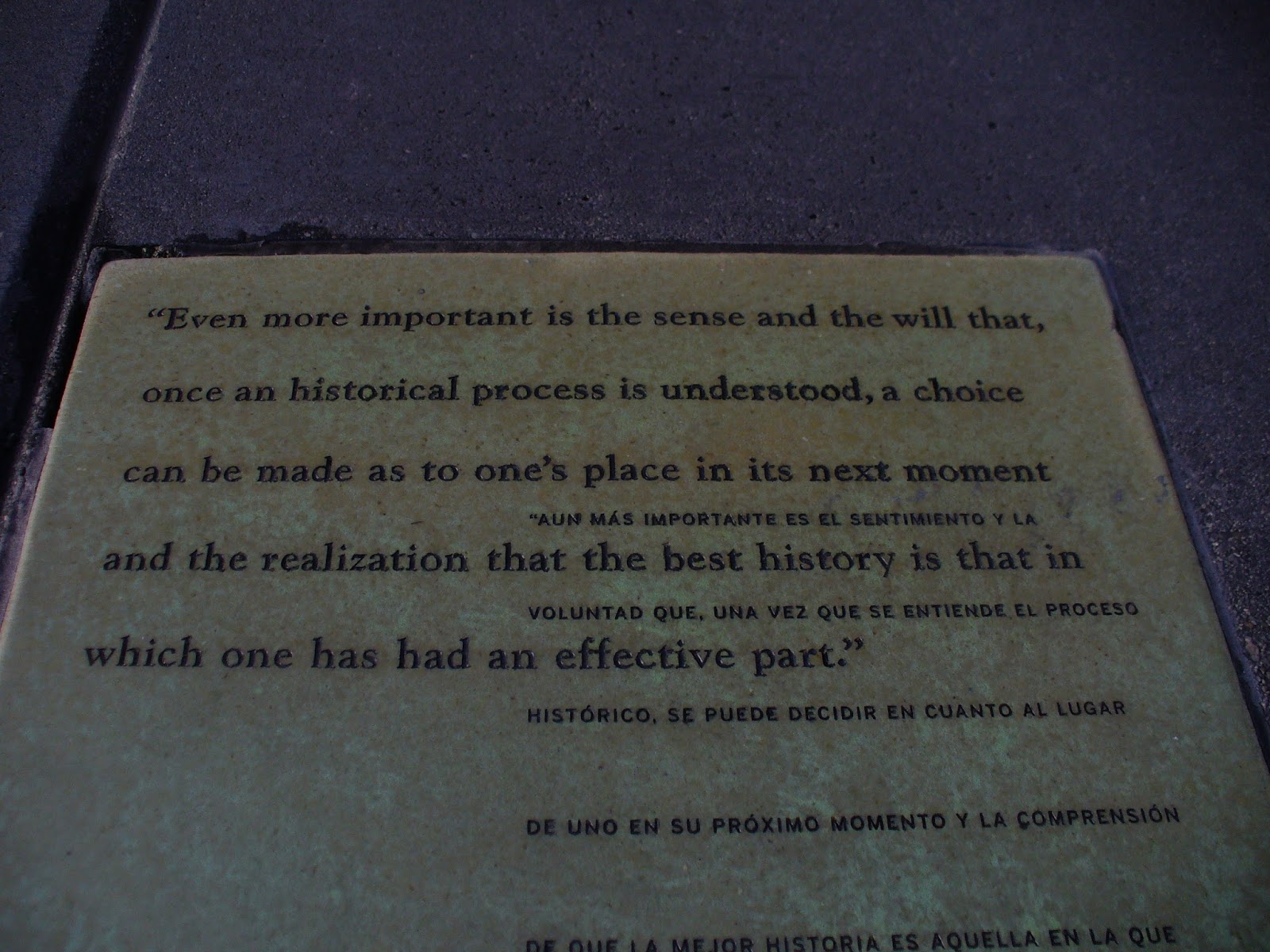
    Coyote is a deity but is also a sort of brother, both helpful and tricky, to people in Native North American mythology. The Ohlone people who lived along the Guadalupe as well as other areas both south and north of here told stories about Coyote, sang about Coyote, and honored him among Eagle, Hummingbird, Crow, Lizard, Hawk, Badger and other Animal People. He was there with his friends in council to form the world and First Peoples. Schifrin's work includes plaques with etched fragments of Ohlone sacred narrative which tell the story of Coyote and the beginning of the Ohlone culture. Coyote mentored the Ohlone in the elements of living well in their environment; he showed them the oak tree and its food. He taught them to fish. At the same time, he loves a good joke whether played on himself or anyone else. S-he is incurably curious and, in some tales, lustful too.    
   There are as many stories about Coyote in California (and all over North America) as there are hairs crowded in his fur. S-he is one unending story. He's got my poem in his back pocket. Coyote Was Here. Coyote Is Here. Coyote speaks. The Ohlone are also still speaking: "We are still here." Coyote is at home here; he travels the riparian corridors and the hills sing to each other in his high, raw voice. It sounds at once beside us and a few ridges away from here. He can do that thing of being here and there.
    Coyote after your nap or if you're looking for some trouble today, lead me to the poem. Call to me. Sing to me in your ancient language and I will listen and try to tell your song to the others.

River in Black and Gray

Monday, January 16, 2017

Landscape Artscape

Downtown San Jose Landmark
    Do you know exactly where you are when you  look at this sculpture? If I were dropped from the sky blindfolded and landed about here stumbling into Beniamino Bufano's California Bear and were allowed to use my sense of touch, I could announce my precise location after tracing my palms along the concrete bear's smooth contours. I think this is part of why I delayed writing this walk (Blogpost the 6th if you're counting, which I am). Besides a run-in with writer's block, a pinch of paralyzing self-doubt, and the usual concerns and pressing matters-- confounding me also these days. . . this challenge of writing about my own hand. That's what the day's route through El Paseo de San Antonio and to the bridge over the Guadalupe River at Woz Way on Park Ave (Coyotes next post) is like for me, writing about my own hand. My hands are a part of my anatomy as these sculptures are a part of downtown's San Jose's anatomy; they always will be. Won't they?
    I have no formal instruction in expounding on the visual arts but I am able to talk to you about these works dedicated in the 1980s as old familiars, as resting spots of my small, walked over and over urban pathways through a lifetime. California Bear first stuck his muzzle up to the sky when I was in elementary school and we 6th graders came out to see "Hello Dolly" at the Center for Performing Arts; Very same bear stood tall for my high school years outside "The Nutcracker," then college during Center for Performing Arts' run of  "Annie Get Your Gun," or "Cabaret" was it? She stood out here on the theatre grounds for "Westside Story" several years ago while an old friend and neighbor enjoyed the show with me. So I wander, wonder about, and write it up: WriteWalk my beat.    
    Next we visit this round, bumpy old guy. What's his name? I see him so often that I forget it. "Lookin' good. Lookin' solid."

Kenneth Matsumoto
  "Untitled" reflects today's last light along the banks of the Guadalupe River. It's a wheel like time. It appears both man-made in its symmetry and natural with its roughness and pocks like the river's bottom. If California Bear is a hand, then SJSU Fine Arts alumnus Matsumoto's stony circle is the bellybutton of the figure of this walk.
Center Detail "Untitled"


From where El Paseo begins on Fourth St. near campus until you arrive at Cesar Chavez Park near the Fairmont, there's lot of art to accompany you. Many painted panels feature work done by local students. Some of them are giant doors which have been turned into canvases. There's a landscape mural of California oak woodlands in summertime which beautifies a cinderblock wall outside Camera 12 Cinemas. There's plenty of artwork to see even as you rush to work, class, or to shop or mail bills and letters at the Third Street Post Office.
    The City has put in anchored benches for the common areas where anyone may read, scribble, sit with the dog, visit and drink coffee, strum a guitar, wait for someone, etc. There's lots of student bustle in this section of El Paseo since it lies between public transit stops and San Jose State University.
    Backtracking through Cesar Chavez Park Plaza, across the street from the park and located between the Fairmont Hotel and the restaurants and coffee shops on the opposite side of the Paseo is an homage to Dr. Ernesto Galarza. He was a Mexican-American civic leader and wrote Barrio Boy, the story of his life as a bracero working in the fields, labor leader, and scholar. Kim Yasuda sculpted the work, and her memorial was dedicated in 1998. She named her tribute to Galarza "Man of Fire."

Man of Fire Kim Yasuda


Above right is a damn good hat. Even though I (as viewer or "reader") am not so keen on the table with its bare areas, it is incontestably a damn good hat lying atop it. I notice this hat each time I wander the Paseo.
    Take yourself out for a walk. Here's a handy artscape map for you to refer to as you go and see for yourself:  

                                          http://www.sanjoseca.gov/DocumentCenter/View/26100

Tuesday, January 10, 2017

Through Roosevelt, second leg (Blogpost the Fifth)

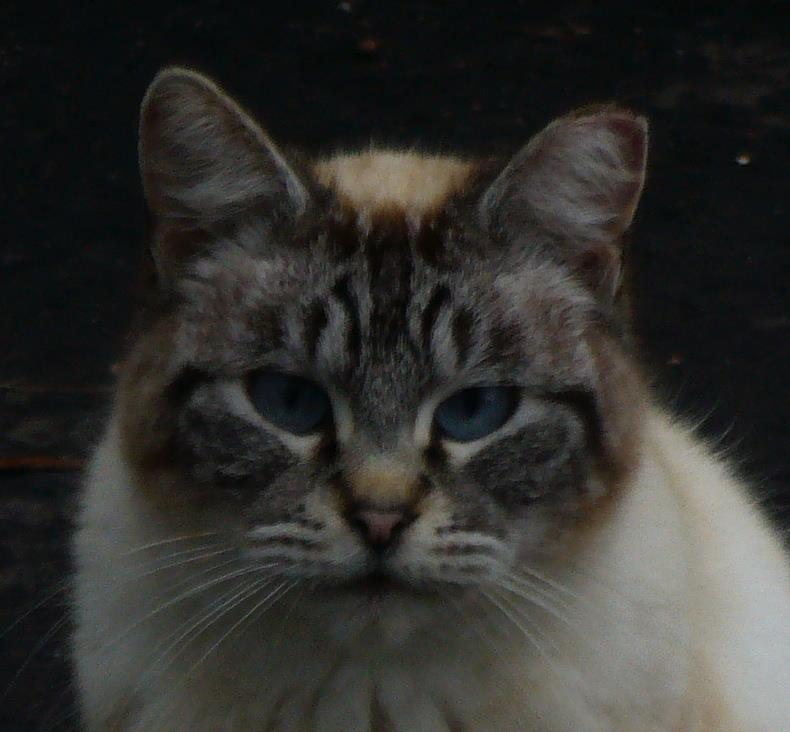
    Princess rules the colony at Roosevelt Park with a quick right paw slap. She was a little wet from sleeping in the landscaping and her "pants" were curled like lamb's wool. She does not appear to be the toughest cat in the colony but apparently she is the boss. She likes to box my shoes when I stop petting her.
Boss (Princess)
Somehow this assortment of cats makes a life here in these urban park margins.
    The Coyote Creek has risen significantly following recent rains. I took a few shots of the ducks and litter traps.
Neighbors years ago endeavored to establish a California native garden in the recesses of Roosevelt Park. A gazebo, some Coyote brush, Hummingbird sage and rushes straggle on. I hear tell the volunteer gardeners were run out by drug dealers and persons propping up temporary shelters in the same habitat.
    I glimpsed and listened to a wren taking shelter and chattering in the Coyote brush. The setting yet resonates with the dream that the neighborhood attempted to bring down to earth and I am saddened that I can't go back there with a book or to prune or weed out English ivy and periwinkle. It might have been a beautiful place to catch up with other people as bees and butterflies worked among us to maintain it. Maybe it could have been a crossroads for people of different walks of life--a kind of place without fences. The health of the rivers is the health of the city. We need to restore these places for everybody. So many city dwellers crave places within reach to hear wind, water, birdsong, and to sit or wander in safety with our own thoughts and feelings.
Tagged Lamppost near Gazebo


I often see something out there on my excursions that reconnects things for me or helps resolve a trouble knocking around in my head. The physical motion of walking and the symbols of the human journey present in nature weave the strands together. They hold me together and keep me going. The magic is real. When I watch a bird splashing itself or flying across the sky with a stick in its beak, the elemental truths come closer to heart. Sometimes it's a seed and its instinctive ways telling me things I need to hear. We lose something crucial to human being when we stay too near the straight edges and neatly squared off corners characteristic of our species. Sometimes you have to log off, get up, get out, and cruise with the dragonfly. Dragonfly of red and gold, wings like the veining of a leaf, revealed.
Attempt at Community Commons


Monday, January 9, 2017

Through Roosevelt Park

   
Hockey Rink
Here are Thanksgiving, Christmas and chili peppers in a haphazard boquet below for curbside pick-up. I saw various orphaned Christmas trees at the curb. I walked in the vicinity of Roosevelt Park and Community Center.

Chilis, Pumpkin and Christmas Tree


It's All Over Now
It is the start of January's second week, chuck-your-tree-week. Seems like a perfect waste to me, but maybe they all get turned into mulch at the landfill. Maybe they come up once more as tomatoes in spring or carrots. Or maybe they just lie down in the street like a once sparkling and garlanded thing recently crowned with a star but now stripped of everything.
    I also see visual koans like this on my walks--

Have You Seen Me?
It was gray out before a soft rain and oddities like this red bell really caught my eye. Is someone watching from the window to see whether I pick it up?
   A child's toy vanity has been rather obscenely trapped in this tree for months now. I suppose it could be lassoed and hauled to the bridge. We have a serious trash and dumping problem in Coyote Creek and in other urban waterways like the Guadalupe River.

Dumped

 I stopped to visit some cats no one wants. There's nothing wrong with them. They are discards. They have names like "Cowboy," "Grampa," "Princess," "Mama" and other names which I have never heard called. . . Some conscientious people in the neighborhood help with food and some basic medical care but for warmth and family they rely on each other. They are amazingly resilient but still deserve better. A lot of people do.

Lion, Grampa, and Mama at Feeding Station


Lion
Mama